Everyone feels the pressure in training and assessment. Learners need clearness, workplaces desire job-ready efficiency, and regulatory authorities anticipate proof that stands up to examination. When I coach new fitness instructors moving with the Cert IV in Training and Assessment, particularly the existing TAE40122, the exact same traps appear again and again. Some are style mistakes that sneak in during device mapping. Others are assessment-day practices that quietly wear down credibility. The bright side is that the majority of are fixable with self-displined planning and small changes in practice.
This is a useful check out where points usually go wrong and what to do about it. I will certainly reference common language from the trainer and assessor course and Certificate IV TAE so you can straighten your method with requirements that matter on the ground.
Misreading the proficiency standard
Misreading a device of proficiency is the origin of several later problems. Fitness instructors could latch onto the Application section and efficiency standards, then miss series of problems or evaluation problems that fundamentally shape what proof serves. I when evaluated a set of evaluation tools developed for a safety device. The knowledge test was solid. The observations were thorough. Yet the evaluation conditions required demonstration under specific legal contexts and use specific tools. None of that was recorded formally. The devices looked polished, yet they could not generate legitimate end results against the unit.
Good mapping requires more than a tick-box grid. It calls for a line-by-line examination: where each performance criterion is observed, just how each expertise proof thing is generated, which jobs generate the called for foundation skills. If you are resolving the cert 4 in training and assessment, you will certainly see that the TAE course embeds this technique. Equating it right into daily method implies never ever dealing with mapping as a second thought to be bolted on at the end. Start your layout with the criterion, not with a design template you like.
Overreliance on understanding tests
Short quizzes and written tasks are efficient. They are also the easiest means to misassess a person. If a system plainly anticipates performance in actual or simulated conditions, a written action can not stand in for observed proficiency. In one audit I supported, an RTO achieved 95 percent completion for a technological unit using open-book theory examinations and a task report. It looked productive. It was not compliant. The system called for repeated demos utilizing specified devices. Expertise alone had been mistaken for competence.
If your evaluation method leans heavily on composed jobs, ask a blunt question: exactly what does this show the student can do? When the solution sounds like recall, summary, or second-hand coverage, you require to add efficiency checks. For the Certificate IV training and assessment, this is not theoretical. It is habit creating. Trainers must have the ability to discuss why a piece of proof shows ability and not simply awareness.
Stripping the context out of performance
Context provides suggesting to efficiency. Remove it, and tasks become hollow. An assessor I dealt with created a great troubleshooting situation for a production unit. The steps matched the performance criteria. The trouble was, the student executed it on a common simulator without reasonable restraints. There was no time stress, no workplace documents to consult, and no interdependency with upstream or downstream processes. The outcome was a neat performance that would certainly break down on an actual shift.
Real or very closely simulated contexts assist the student show crucial judgment. They also protect you, because they make it feasible to declare assessor confidence concerning office transfer. The analysis problems in numerous units clearly describe genuine equipment, groups, and safety and security controls. Read those thoroughly. If you choose simulation, define exactly how it mirrors the work environment in adequate information that an additional assessor could replicate your problems. For complex roles, 2 or more different circumstances assist defend against a job that by the way suits a narrow experience.
Confusing principles of analysis with policies of evidence
Even experienced instructors occasionally conflate these 2 sets of quality supports. Concepts of analysis have to do with the procedure: justness, flexibility, legitimacy, and dependability. Regulations of proof have to do with the proof itself: validity, sufficiency, authenticity, and money. Mixing them generally results in odd compromises, like making a job a lot more adaptable but after that failing to validate authenticity.
A well balanced approach might resemble this. You give 2 task choices to permit various work environment contexts, which supports adaptability and fairness. You after that call for third-party verification, annotated job examples, and a short viva to validate credibility and sufficiency. When you hold both frameworks in sight, your decisions make sense to auditors, to industry, and to learners.

Weak or absent affordable adjustment
Reasonable adjustment is a professional ability, not a soft-hearted additional. It allows you to transform the means evidence is gathered without weakening the competency outcome. Trainers new to the certificate 4 training and assessment frequently under-adjust for anxiety of noncompliance, or over-adjust by transforming the real efficiency requirement. Neither holds up.
Here is a practical border. You can transform the analysis level of guidelines, permit oral reactions as opposed to created for theory, provide assistive modern technology, or routine even more time. You can not eliminate a safety-critical action or approve monitoring by a non-competent individual. Modifications need to still produce legitimate and adequate evidence against the device. Document both the requirement and the precise modification made, preferably with LLN profiling as your baseline.
Failing to recognize LLN requires early
Language, proficiency, and numeracy concerns disclose themselves throughout analysis if you do not display previously. Then you obtain preventable re-sits, demoralised students, and an assessor scrambling to rescue a falling short event. This is specifically visible in the cert iv training and assessment where the freshly qualified assessor typically fulfills a diverse mate. A ten-minute LLN indicator at enrolment will not address every little thing, yet it flags who may require easier directions, visuals, or mentoring in exactly how to translate workplace documents.
Use ordinary language in task briefs. Build a brief micro-lesson on checking out a risk matrix or interpreting a treatment if the device relies upon those abilities. Where numeracy is included, offer functioned examples during training, after that remove them in assessment while maintaining a formula sheet if the office enables it. Straighten practice with job reality.
Poor monitoring practice
Observation appears uncomplicated till you compare two assessors' records from the same event. One writes, "Finished task securely and correctly." The various other notes, "Examined seclusion lock, validated tag information match work order, evaluated for absolutely no power with meter, fitted personal lock, attempted beginning, then finished step-down procedure." The 2nd record is defensible. The first is not.
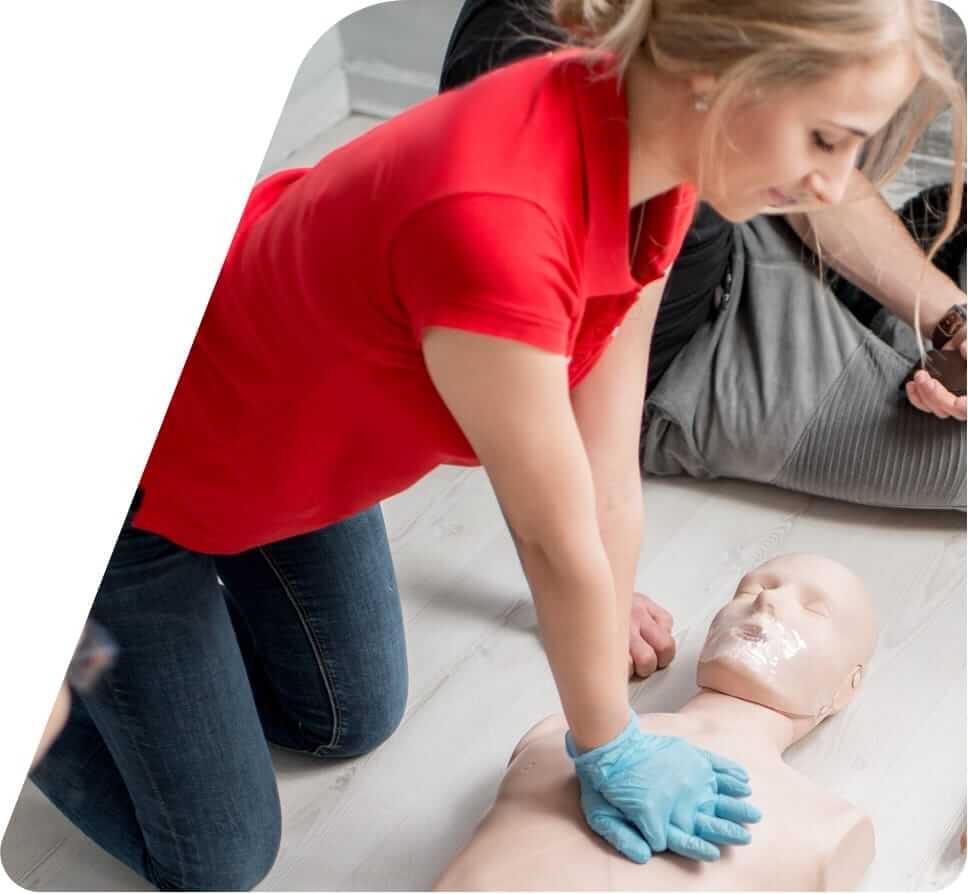
Use behaviourally secured checklists and add narrative comments that record choice points and run the risk of controls. If the system anticipates repeated performance, do not compress three attempts right into a single extended observation. Schedule them independently or develop a job with natural repeating. If co-assessing, adjust ahead of time. Hold a brief moderation chat after the very first few monitorings to remedy drift.
Ignoring third-party evidence, or counting on it also much
Supervisors can provide useful viewpoint, but third-party reports are not a magic stick. Unguided, they become vague endorsements or workplace national politics in composing. Supply clear criteria and examples of appropriate evidence. A one-page guidance sheet for managers, written in their language, will get you better results than a generic kind with boxes to tick. Alternatively, if the system requires assessor observation, a third-party record can not change it. Treat external testament as corroboration, not substitution, unless the system design clearly enables it.
Sloppy version control and record keeping
I once saw three different versions of the exact same assessment tool in active use across a solitary quarter. Each had slightly various guidelines. The mapping matrix did not match any of them. When an audit team asked which variation related to a particular associate, nobody could address cleanly. That is just how small administrative gaps create big compliance risks.
Train your group in standard record control. Devices must carry a clear variation number and efficient day. The mapping matrix must reference certain product numbers in the precise version of the tool. Store observations, pictures, tasks, and RPL proof in an organized database with regular identifying. When your records are findable and understandable, whatever else ends up being less stressful.
Contextualising also far, or otherwise enough
Contextualisation is allowed, also urged, in many trainer and assessor certificate iv training and assessment courses, but there is a difficult line between reasonable tailoring and rewriting the proficiency. Getting rid of a needed component, narrowing the series of conditions to a solitary brand of equipment when the work market uses a number of, or including performance standards absent in the system are common mistakes. On the various other hand, falling short to contextualise whatsoever can produce generic jobs that do not resemble the learner's job.
Stay within the boundaries. Readjust terms to match the office. Supply instances that mirror regional procedures. Add practical restrictions. Do not delete called for results or include new ones. When doubtful, write a short contextualisation declaration that notes what you transformed and why, referencing the system's structure. That statement makes interior moderation much easier.
Over-assessing and under-assessing
Under-assessment is apparent when proof is thin. Over-assessment hides behind business aspiration. I have actually seen programs for a single device balloon right into a nine-part assessment portfolio needing 18 hours of learner time and 3 hours of assessor noting. Most of it copied evidence. No stakeholder wins in that scenario.
Efficiency comes from sound tasks that gather multiple evidence points in one go. An office project, for example, can reveal preparation, examination, risk administration, and reporting in a solitary plan if developed well. For the cert iv trainer assessor community, this is a trademark of maturation: much less documents, more authenticity, and a mapping matrix that shows insurance coverage without bloat.
Weak responses culture
"Qualified" and "Not yet experienced" are end results, not responses. Real improvement comes from exact, considerate notes that help the learner close a gap. When training brand-new assessors in a Certificate IV training and assessment program, I request one sentence on what functioned and one on what to transform, anchored to visible behavior. For re-submissions, be specific concerning what brand-new proof is needed and what criteria it must satisfy. If you are weary, withstand the temptation to create shorthand in your very own lingo. cert 4 training and assessment The student should have clarity, and your future self will value it when reviewing the documents months later.
Neglecting recognition and moderation
Tool validation and post-assessment small amounts are usually treated as documentation. They are not. They are your quality assurance system. Pre-use recognition captures imbalance prior to learners feel it. Post-use moderation spots wander in between assessors and makes clear grey areas. Arrange these purposely. Welcome an external industry representative at the very least yearly for high-risk or high-volume systems. Keep mins that reveal choices and the proof that supported them. Over time, your tools become sharper and your assessor team a lot more consistent.
Currency and industry involvement as living practices
The certificate 4 in training and assessment opens the door, yet it does not keep you current. Regulatory authorities expect currency in both professional skills and VET practice. Market engagement is not a quarterly e-mail to a friend. It resembles present workplace files in your training space, current instances in situations, and tiny updates to devices after genuine modifications in the field. If you educate WHS, reviewed occurrence notices and integrate fresh case studies. If you examine digital systems, rest with customers after a software update. Currency after that appears organically in your materials and judgments.

Online distribution pitfalls
Remote distribution and analysis brought adaptability, but it additionally intensified two threats: authenticity and access. Enjoying keystrokes is not the like authenticating identity. Securing assessments behind bandwidth-heavy platforms leaves out individuals in low-connectivity areas. If you examine online, prepare for robust identification checks, timed live presentations where feasible, and clear guidelines on permitted sources. Offer low-bandwidth alternatives for instructions and entries. When you make a decision to proctor, tell students what information you gather and why, and provide a channel for issues. Consistency matters here. Mixed signals erode trust.
RPL shortcuts and bottlenecks
Recognition of prior understanding need to be reliable, but it can not be laid-back. The quick trap is accepting top-level task titles and old certificates as if they were existing, sufficient evidence. The slow-moving catch is developing RPL packages that ask for every little thing imaginable, paralysing applicants and assessors alike.
An experienced RPL assessor asks targeted concerns: what did you do, exactly how usually, under what problems, with what outcomes, and when. They seek workplace artefacts that show decision-making and conformity, not just participation. They triangulate with a brief competency conversation and, if required, a void job. Keep RPL concentrated on the proof that matters, and demand currency. For high-risk proficiencies, 3 pieces of triangulated evidence per crucial result is a sensible benchmark.
Scheduling that undermines assessment quality
Time stress motivates shortcuts. Assessors compress observations into marathons, skip pre-briefs, and compose minimal notes. Managers double-book trainers that are likewise assessors, so neither function is succeeded. When a Certificate IV training and assessment graduate enter a busy RTO, this is the shock.
Protect evaluation windows. Plan for setup, instruction, demonstration, doubting, and recording. If you require 90 mins, timetable 90, not 45 with a promise to complete later on. A practical timetable is not a high-end. It is a stability safeguard.
A portable pre-assessment checklist
- Confirm you have the current unit and tool versions, with mapping at hand. Check LLN and any agreed affordable adjustments, taped in writing. Verify evaluation conditions, consisting of equipment, environment, and safety. Prepare observation prompts and inquiries aligned to the rules of evidence. Communicate expectations to students and any kind of third parties in plain language.
When an audit flags a void, move quick and methodically
- Isolate the extent: which units, which cohorts, which tool versions. Stabilise distribution: pause afflicted evaluations or add acting controls. Gather evidence: mapping, examples, assessor notes, validation records. Fix origin: redesign jobs, retrain assessors, upgrade procedures. Prove closure: re-validate, moderate new results, and record changes.
A short word on psychometrics, without the jargon
Not every RTO needs major product evaluation, however some light self-control boosts your composed instruments. Track which concerns routinely flounder qualified learners. If a single distractor in a multiple-choice thing attracts most actions, it may be ambiguous or miskeyed. If a vital expertise product shows a pass rate below 40 percent throughout mates, examine your teaching sequence and inquiry phrasing. Small data behaviors avoid large web content misunderstandings.
Bringing it with each other in practice
Imagine you are upgrading a safety induction collection. You start by re-reading the units and annotating assessment problems. You review your mapping, after that style one integrated workplace job that covers danger recognition, danger analysis, and coverage. You compose clear guidelines at an accessible reading level, installed a short organized meeting to probe knowledge, and create your observation list with behaviourally secured statements. You established a supervisor support sheet for third-party evidence and specify what photos or scans count as acceptable artefacts. Before rollout, an associate validates the tool against the systems, and a market contact checks realistic look. You pilot with a tiny group, moderate the first five end results, modify 2 uncertain instructions, and then release version 1.1. That is the cert iv tae attitude applied, not as a conformity exercise however as great craft.
The distinction turns up in four locations. Learners really feel prepared because the jobs make good sense. Assessors feel great since the devices support their judgment. Employers see new hires that actually do at the anticipated level. Auditors see clean positioning and reasonable proof. That is what a robust training and assessment course ought to deliver.
If you are early in your journey with the certificate 4 in training and assessment or tipping up to develop responsibilities after years on the tools, build habits around these common challenges. Review the common very closely. Style for efficiency, not documents. Adjust for people without adjusting the expertise. Maintain your records excellent. Confirm and modest with intent. And keep one eye on the industry as it shifts. The rest is stable job, finished with treatment, that turns assessments into trustworthy stories regarding what people can do.